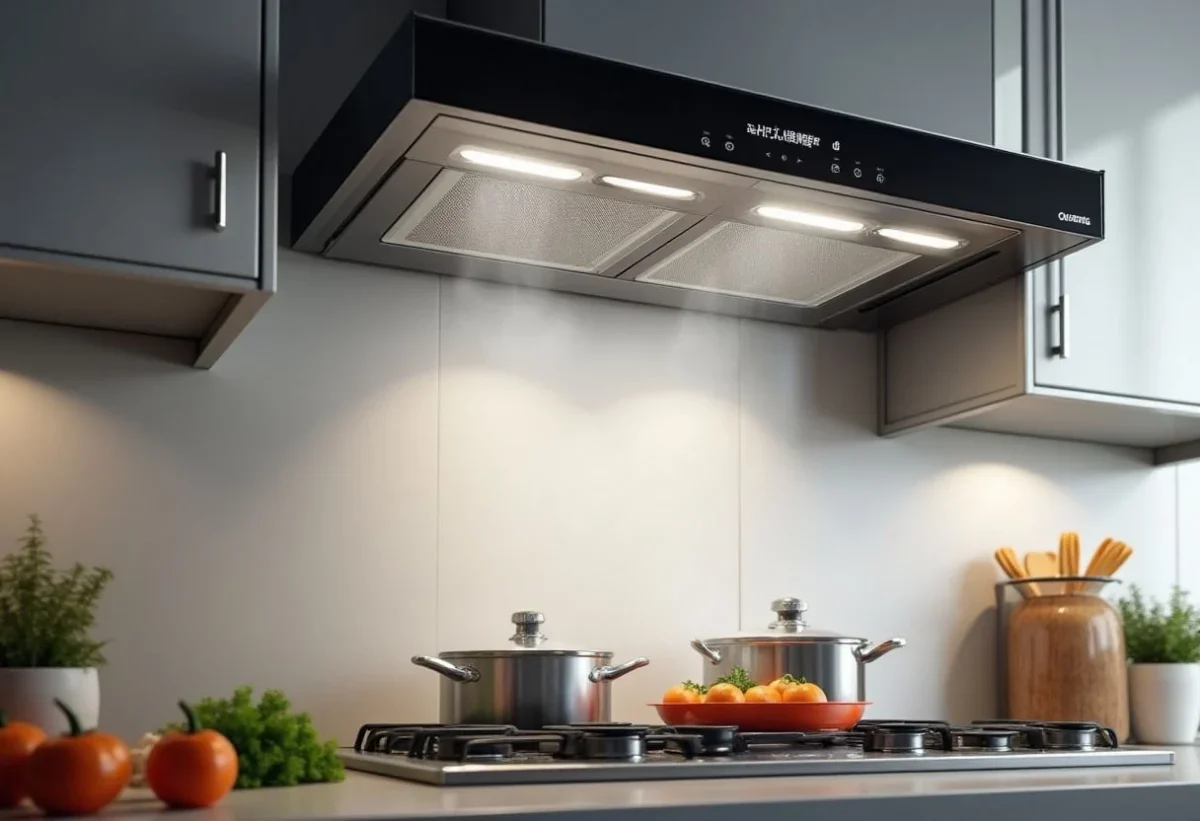
Range hoods are essential elements in any modern kitchen. They ensure healthy air by eliminating smoke, odors, and grease generated during cooking. But how does a range hood work, along with its motor and key components?
How Range Hoods Work
What is a range hood?
A range hood is a household appliance designed to extract smoke, steam, and cooking odors. Its main goal is to maintain a clean and odor-free kitchen environment. Range hoods can be installed in home kitchens, but they are also essential in professional kitchens where smoke and steam volumes are higher.
Importance of Extraction in the Kitchen
The extraction of odors and smoke is crucial to prevent the buildup of grease on walls and ceilings, which could pose health and safety risks. A kitchen range hood, whether domestic or professional, ensures air circulation and prevents fire hazards by evacuating air laden with greasy particles.
The Motor of a Range Hood
Essential Role of the Motor
The motor of the range hood is the heart of the appliance. It drives the fan that sucks in stale air and directs it outside or through a filtration system. The motor power of the hood directly affects the efficiency of air extraction.
Types of Motors in Hoods
Different types of motors can equip a range hood. Among the most common are induction motors, valued for their energy efficiency and low noise levels. Scroll motors are known for their robustness in professional applications. A remote motor can also be used to reduce noise in the kitchen.
Motor Power and Performance
The motor power of a kitchen hood is crucial for ensuring good extraction. It must be suited to the size of the kitchen and the type of cooking practiced. Professional hood motors are often more powerful to meet the high demands of commercial kitchens.
Electrical Supply of the Motor
The motor of a hood requires appropriate electrical installation. It is important to check that the voltage and amperage comply with the motor specifications to ensure optimal operation. The installation should be carried out by a professional to avoid any risk of malfunction.
Filtration System in a Hood
Types of Filters Used
Range hoods often use two types of filters: grease filters and charcoal filters. Grease filters are designed to capture suspended grease particles, while charcoal filters eliminate odors before the air is reintroduced into the kitchen.
Maintenance of Filters
Regular maintenance of the filters is essential to maintain the efficiency of the hood. Grease filters should be cleaned or replaced periodically, while charcoal filters require regular replacement to remain effective. This helps prolong the lifespan of the range hood motor.
The Casing and Fan of the Hood
Structure of the Casing
The ventilation casing houses the motor and the fan. It is often made of stainless steel to resist corrosion and ensure optimal durability. A good extraction casing is crucial for effective evacuation.
Operation of the Fan
The fan of the kitchen hood plays a key role in air extraction. There are several types of fans, each with its own characteristics. Professional fans are generally more powerful, offering better extraction capacity for high-volume kitchens.
Tips to Optimize the Performance of a Range Hood
Choosing the Right Hood Model
Choosing a range hood should take into account several factors, such as extraction power, noise level, and energy consumption. For professional kitchens, it is often recommended to opt for induction hoods or models with a remote motor.
Regular Maintenance of the Extraction System
Regular maintenance, including cleaning the filters and ducts, is essential to ensure the optimal functioning of the range hood. This helps prevent motor overheating and prolongs the lifespan of the appliance.
Cost and Investment in a Professional Hood
Investing in a professional hood can represent a high initial cost, but it is a worthwhile investment in the long run. High-quality hoods offer better performance and increased durability.
When considering a hood without a motor, it is essential to choose a model that can accommodate a high-performance motor suited to the kitchen’s needs.