
The emergency agricultural law of August 18, 2026, has reshaped the intervention scope of SAFER regarding agricultural land. For any investor targeting mixed properties (land, farm buildings, adjacent housing), the acquisition conditions have changed on several key points. Ignoring these developments exposes one to a blockage of the transaction, or even to a partial preemption that the seller can no longer counter as easily as before.
Partial SAFER preemption on mixed land: what the 2026 law changes
The reform now requires separate notifications when the sale includes preemptable properties and non-contiguous parcels that are not. In practice, if you buy a farm with agricultural land and a separate residence, SAFER can preempt the agricultural part without the seller being able to demand the purchase of the entire property.
This partial preemption creates a direct financial risk. The buyer who has calibrated their financing plan based on the entire property ends up with only the residential part, which is often less profitable when isolated. We recommend structuring the purchase offer by anticipating this scenario, with appropriate suspensive clauses.
The resources published on Le Blog Du Foncier regularly detail the operational implications of these new rules for agricultural land buyers.
Another point to consider: SAFER’s right of visit now suspends the preemption period. The clock stops between the visit request and the actual visit (or the owner’s refusal). In a transaction where deadlines are tight, this suspension can delay the signing by several weeks without the parties having control over the schedule.
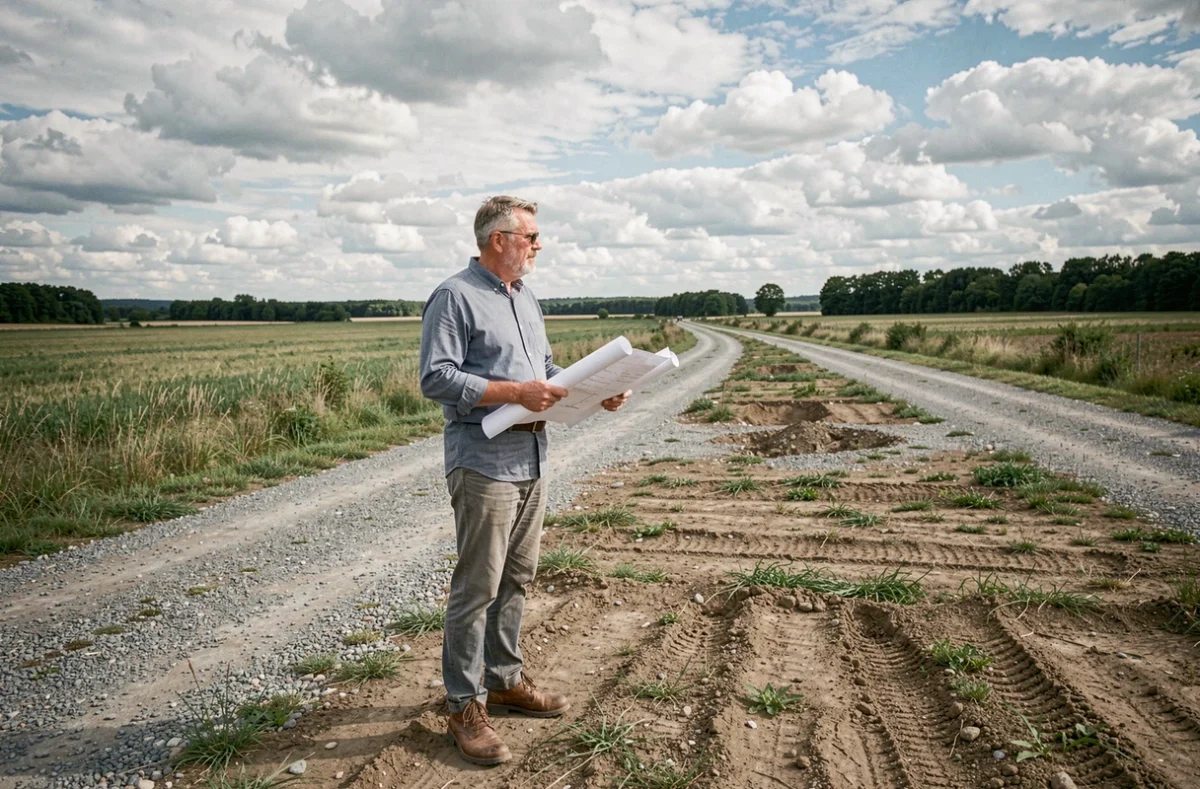
Converted old barn: agricultural land that remains preemptable
An agricultural building converted into housing does not automatically exit the SAFER perimeter. The 2026 law strengthens this principle: an old barn converted into a residence remains exposed to preemption longer than before. The determining criterion is not the current use of the building, but its land history and the nature of the land on which it is located.
For the investor, the consequence is clear. Buying a renovated barn as a rural gîte or secondary residence on a parcel classified as agricultural does not protect against SAFER intervention. The notary must check the cadastral zoning and usage history before drafting the preliminary agreement.
Preliminary checks before any acquisition of converted agricultural buildings
- Consult the cadastral survey to confirm the agricultural or non-agricultural nature of the parcel, regardless of the declared use of the building
- Request the notary to purge the SAFER preemption right before signing the preliminary agreement, even if the property is presented as residential
- Check if the change of use has been subject to a planning permission (building permit or prior declaration), as the lack of authorization weakens the buyer’s position in case of dispute
Agricultural emphyteutic lease and transfer of shares: two common blind spots
Agricultural emphyteutic leases constitute a specific point of vigilance since the reform. The transfer of an old emphyteutic lease can trigger an opposition from SAFER, even if the buyer does not aim for ownership of the land. The distinction between lease transfer and fund transfer no longer systematically protects the operation.
We observe that many investors underestimate this risk when acquiring a property burdened with a long-term emphyteutic lease. The lease grants real rights, but SAFER can intervene on the transfer itself if the property falls within its expanded scope of action.
Shares in agricultural companies and indirect control of land
The reform also concerns indirect arrangements. The acquisition of shares in GFA (Agricultural Land Group) or civil companies holding agricultural land remains subject to approval or purging of the preemption right. Transferring shares in an agricultural company without purging the SAFER right exposes the transaction to a challenge.
The risk is even higher as some dismembered rights (usufruct, bare ownership) fall within the scope of the reform. An investor buying the bare ownership of shares in a GFA must ensure that the operation has been notified to SAFER in the forms provided by law.

Investing in agricultural land: structuring your acquisition to limit blockages
The profitability of a land investment is not measured solely by rental yield or potential capital gains. Regulatory risk directly impacts the liquidity of the property and the transaction timeline.
- Include in the preliminary agreement a suspensive clause related to the absence of SAFER preemption, including on converted buildings
- Provide for an extended realization period to absorb the suspension related to SAFER’s right of visit
- Conduct a complete land audit before any offer on a property including agricultural land, an emphyteutic lease, or shares in an agricultural company
- Clearly distinguish in the deed the preemptable lots from those that are not, in accordance with the obligation for separate notification
Agricultural land remains a solid asset, provided that the legal framework surrounding it is mastered. The law of August 18, 2026, has tightened entry conditions for non-agricultural investors. Any mixed acquisition project now requires a land audit and an adapted notarial strategy even before the first offer.