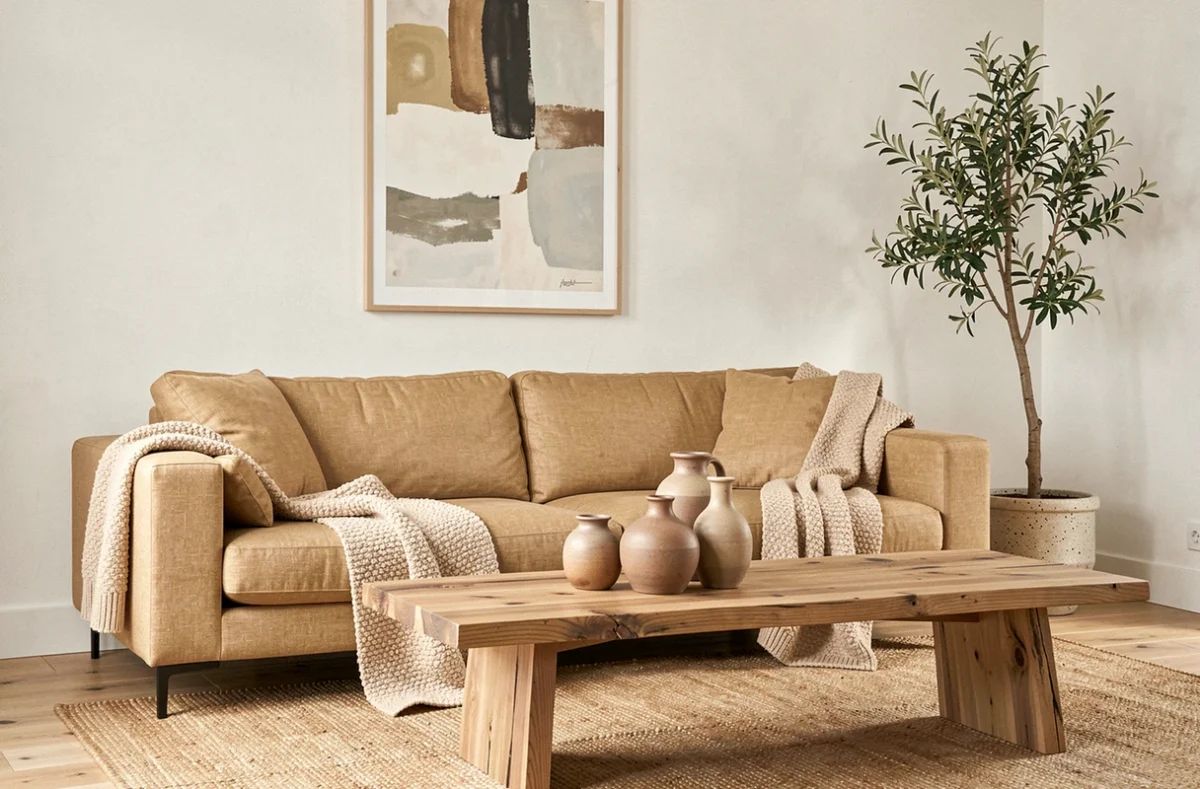
The white walls and strict lines have long dictated the ambiance of our interiors. For a few seasons now, decoration has taken a more sensory, textured, and bold turn. The Maison&Objet Pulse show, held from September 10 to 14, 2026, at Paris Nord Villepinte, confirmed this shift with a theme centered on sensations and disconnection.
Four movements structured the presentations: grounding, serenity, elevation, and exaltation. Here are the concrete trends that emerge from this and what they change in a living room, kitchen, or bedroom.
Large-format ceramics and artisanal pieces: the return of the hand
Have you noticed that the objects placed on a shelf seem less and less smooth? This is not a coincidence. The presentations from September at Paris Design Week highlighted ceramics displayed on a large scale, sometimes as tall as a low furniture piece.
These pieces do not come from an industrial mold. They blend artisanal references and repurposed materials. You can see irregular surfaces, thick glazes, and visible manufacturing traces left intentionally.
The interest in interior decoration goes beyond just choosing a wall color. Following home and decor news allows you to spot these evolutions before they saturate mainstream catalogs.
In a living room, a single large-format ceramic placed on the floor replaces an accumulation of small objects. The gesture is simple, but it alters the perception of the entire space. In the kitchen, artisanal tiles as a backsplash add relief without overwhelming.
Raw wood and glossy finishes: two textures coexisting
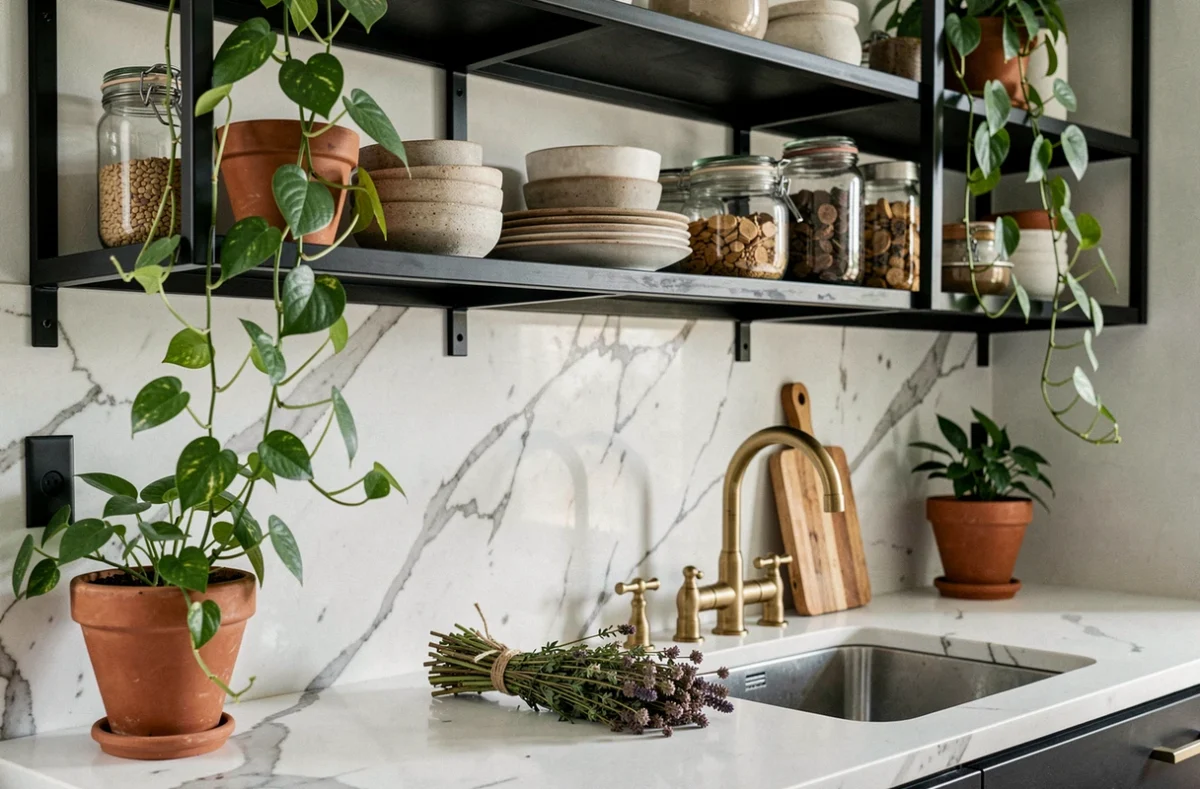
Unpainted wood was already present in previous trends, often associated with Scandinavian style. The novelty spotted at the Maison&Objet Pulse show lies in its association with glossy finishes, such as lacquered surfaces or polished metals.
This contrast creates a visual play between matte and reflective. A raw solid oak table with chrome metal legs, for example, does not fit into any fixed stylistic category. This is exactly what exhibitors are looking for: furniture that escapes a single decor style.
For an existing interior, this trend translates easily. Just introduce a shiny element (a light fixture, a vase, a tray) into a room dominated by wood or natural materials.
What this changes for living room and kitchen furniture
The furniture presented at the September show values the uniqueness of each piece rather than the coherence of an entire collection. An expressive-shaped armchair can coexist with a table with simple lines without creating a break, provided the materials communicate with each other.
This principle is also applicable in the kitchen. Raw brass cabinet handles on light wood facades produce the same effect of textured contrast, without heavy renovation.
Sculptural large-format furniture: when the table or sofa becomes the centerpiece
The trend for “sculptural” furniture is not new, but it is gaining momentum. Designers are now showcasing pieces that embrace generous proportions and distinctive organic shapes.
In practical terms, this translates to:
- Dining tables with massive legs and thick tops, often made of reconstituted stone or solid wood, designed to become the focal point of the room.
- Sofas with pronounced curves, intended to structure an open living room rather than being pushed against a wall.
- Asymmetrical shelves and consoles that serve both as storage and wall decoration.
The central idea is simple: one strong piece of furniture is enough to define the ambiance of a room. Multiplying small decorative accessories then becomes unnecessary. This principle aligns with the spirit of warm minimalism, but adds a sculptural dimension absent from classic clean interiors.
Tactile materials in the garden and home: the sensory extension
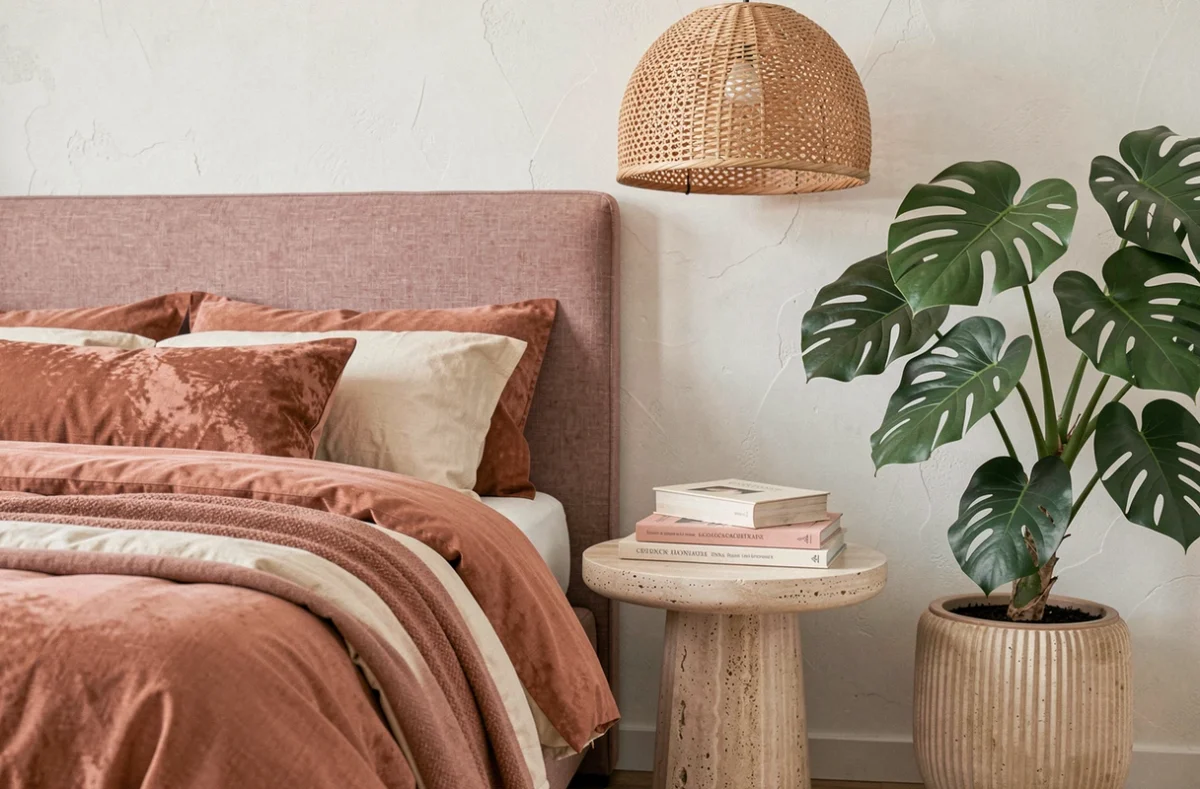
The “Sensory Shift” theme of Maison&Objet Pulse invited attendees to disconnect to reconnect with sensations. This is not just a slogan. Exhibitors offered materials that you want to touch: boucle fabrics, raw stoneware, thick linen, and hand-woven rattan.
This tactile exploration extends beyond the living room or bedroom. The garden and terrace are included. Unglazed terracotta pots, woven rope seating, and natural stone outdoor tables participate in this same sensory logic.
How to choose the right materials for each room
The choice depends more on use than on style. Here are the combinations that work best according to feedback from the September presentations:
- Living room: boucle fabric on the sofa, stone or ceramic for the coffee table, raw wood for the shelves.
- Kitchen: stoneware or polished concrete for the countertop, solid wood for the table, brushed metal for accessories.
- Garden: terracotta for containers, rope or rattan for seating, untreated wood for structures.
The goal is not to change everything at once. Replacing a single element with a more textured, raw material already alters the overall perception. A thick linen cushion on a smooth sofa, a stoneware tray on a glass table: the texture shift does all the work.
The decor trends for the end of this year converge towards a single principle: prioritizing what you feel in a room, not just what you see. Home decoration becomes a matter of touch, proportions, and uniqueness, far from the interchangeable interiors of previous years.