
The Makita LS1018L is a professional-grade miter saw, equipped with a 1430 W motor and a 260 mm blade. As this model gradually approaches the end of its catalog life with several European distributors, the question arises: do its performance justify a purchase in 2026, considering the LS1019L which officially replaces it?
Reliability of the carriage and precision after prolonged use
Product specifications detail the new cutting capabilities, but they say nothing about the machine’s behavior after two or three years of daily service. It is precisely here that the LS1018L reveals both its strengths and limitations.
Several users in woodworking shops report that the miter accuracy remains stable over time, provided a regular maintenance protocol is followed. The parallelism of the guide rail must be checked periodically, and the angle stops tightened as soon as any slight play appears in the preset positions.
However, a recurring weak point emerges from field feedback: a side play in the carriage manifests after intensive use, especially in a mobile workshop setup where the machine undergoes frequent movements. This play results in a slight misalignment in precision cuts, noticeable on finishing joints. Cleaning and re-lubricating the slides can help limit the phenomenon, though it does not eliminate it entirely.
For those wishing to delve deeper into this issue, our review of the Makita LS1018L miter saw details the checkpoints to monitor over the months of use.
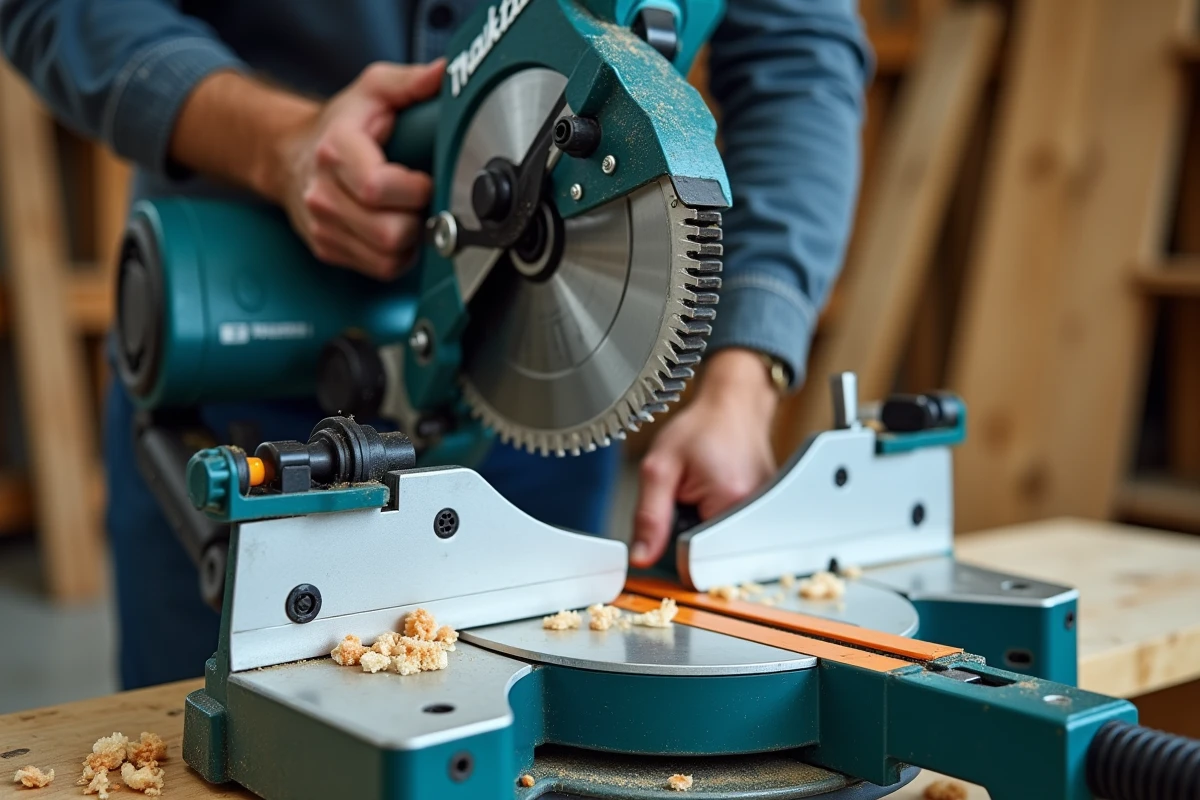
Makita LS1018L vs LS1019L: Technical Differences Table
The LS1019L is presented as the direct replacement for the LS1018L. Both machines share the same mechanical base, but a few differences guide the choice depending on the usage profile.
| Criterion | LS1018L | LS1019L |
|---|---|---|
| Motor Power | 1430 W | 1510 W |
| Blade Diameter | 260 mm | 260 mm |
| Guiding System | Classic telescopic rail | Revised rail (reduced footprint at the back) |
| Cutting Capacity in Width | Comparable | Comparable |
| Availability in 2026 | Clearance / special order | Current catalog |
The power gain of the LS1019L is particularly felt in dense materials (exotic woods, thick laminated panels). For common cuts on softwoods or MDF, the difference remains marginal.
The reduced rear footprint of the LS1019L is the most concrete improvement in daily use. The LS1018L requires sufficient clearance behind the machine for the rail movement, which poses a problem in narrow workshops or against a wall. The LS1019L addresses this issue with a redesigned sliding mechanism.
Original Blade and Replacement: What Changes the Cutting Quality
The blade supplied with the LS1018L allows for adequate cuts in general use. For finishing (baseboards, frames, moldings), it quickly shows its limits with chipping on the edges of the wood.
Switching to a higher-quality carbide blade literally transforms the results. The criteria to prioritize include:
- A high tooth count (minimum 60 teeth for finishing on softwood or MDF), which reduces chipping and produces a surface finish close to sanding
- An alternate tooth geometry (ATB), suitable for clean crosscuts across the wood fibers
- A 30 mm arbor, standard on Makita miter saws in this range, compatible with blades from third-party brands
Replacing the original blade remains the first investment to consider after purchasing the machine. The cost of a high-end blade represents a fraction of the saw’s price, for a disproportionately high quality gain.
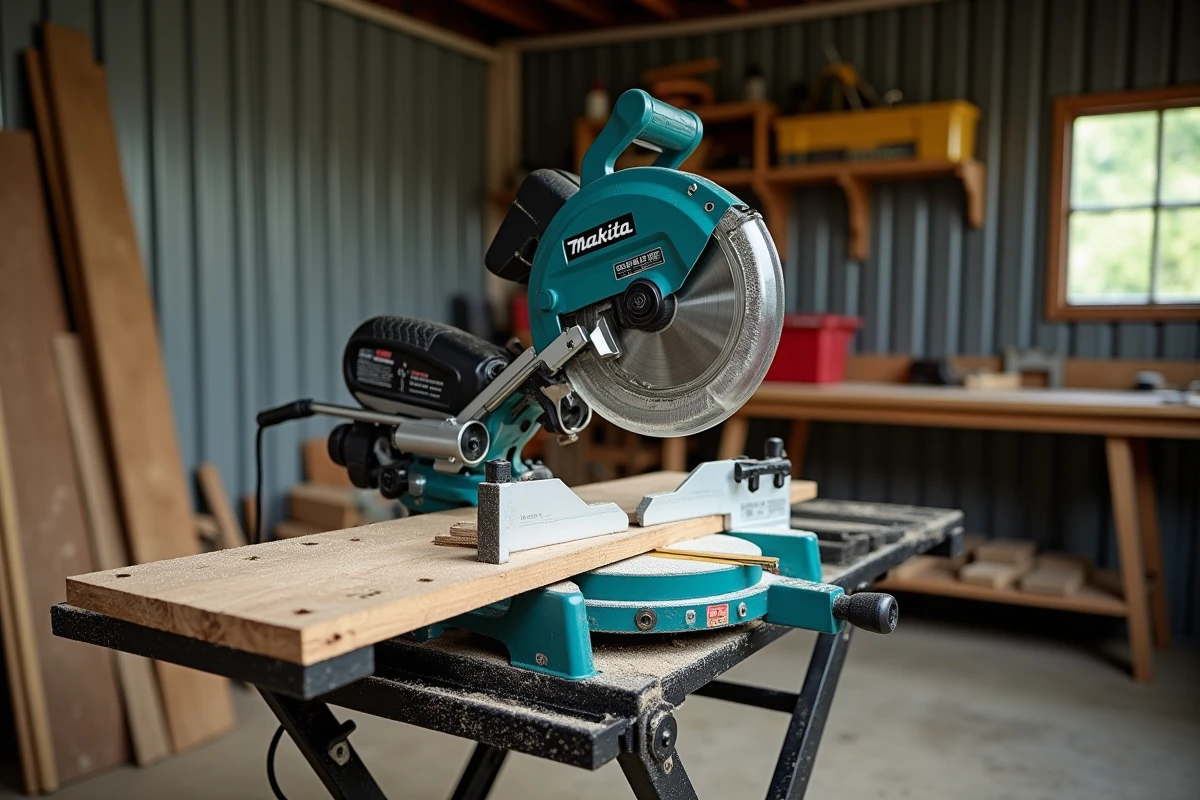
Regular Maintenance of the LS1018L: Key Checkpoints Not to Overlook
The longevity of the machine depends less on the robustness of its design (which is solid) than on the regularity of maintenance. Three operations are crucial for maintaining precision:
- Check the parallelism of the guide rail every two to three months with regular use, using a precision square placed against the blade and the guide
- Tighten the preset angle stops (0°, 15°, 22.5°, 30°, 45°) as soon as any play appears at the locking point, which prevents cuts from being misaligned by half a degree
- Clean and lubricate the slides of the telescopic carriage with a dry lubricant (like PTFE), avoiding thick greases that trap wood dust
Neglecting maintenance on this miter saw directly results in a measurable loss of precision on miter joints. A few minutes of regular checks protect the investment much more effectively than a machine stored under a cover between jobs.
The Issue of Spare Parts at the End of the Catalog
The LS1018L shares many components with the LS1019L (blade, guard, dust extraction system). Specific parts for the carriage and rails remain available from Makita, but their supply could become complicated in the medium term if the model is permanently removed from the European catalog. Checking the availability of slides and carriage bearings before purchase is a reasonable precaution.
The LS1018L remains a high-performing miter saw for those who accept its status as a model nearing the end of its commercial life. Its precision holds over time, its motor is sufficient for the vast majority of common materials, and replacing the original blade is enough to make it a finishing tool. The decision between the LS1018L and LS1019L hinges on two concrete points: the rear footprint and peace of mind regarding future parts availability.