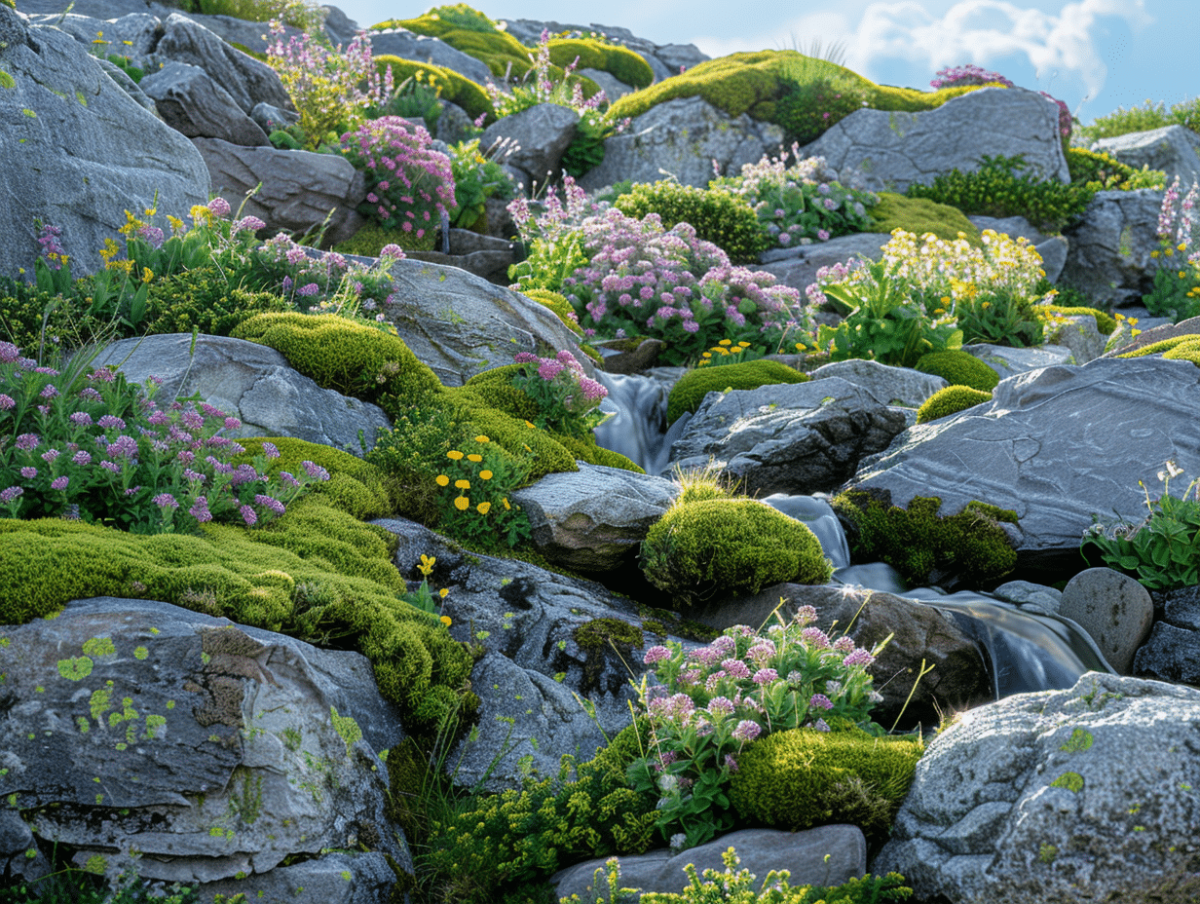
The success of a rock garden lies in the harmonious combination of stones, resilient plants, and a thoughtful layout that mimics natural landscapes. These gardens, fascinating for their raw aesthetics and low maintenance requirements, attract gardening enthusiasts seeking a creative challenge while wishing to create a sustainable outdoor space. By drawing on the advice of landscapers and the secrets of experienced gardeners, it is possible to transform a neglected corner of the garden into a living tableau, where textures and colors blend to evoke the raw beauty of nature.
Key steps to create a harmonious and sustainable rock garden
Choosing the location: To successfully create your rock garden, select a space that benefits from sunny or partially shaded exposure. Avoid overly sloped areas, which can complicate the installation and maintenance of plants and stones. Well-drained soil is essential to prevent root rot and other horticultural mishaps. The location should also allow you to maximize the available space for your garden while seamlessly integrating the rock garden into the existing environment.
Selecting materials: Choose local stones that naturally blend into the landscape and promote aesthetic coherence. These stones should be partially buried in the ground to ensure stability and create a more natural appearance. To landscape a slope with stones, ensure that the arrangement is both aesthetic and functional, facilitating soil retention and water management. Diversify the types – pebbles, rocks, decorative gravel, or slate – to add texture and contrast.
Arranging plants: Combine perennial plants suited to your region that will thrive with minimal maintenance. Among them, miniature conifers, dwarf shrubs, and ground-cover perennials form a solid foundation for the creation of your rock garden. Integrate small bulbs for seasonal color accents and succulents for their drought resistance. The diversity of chosen species should offer a varied tableau throughout the year, with creeping, trailing plants and grasses to complete the composition.
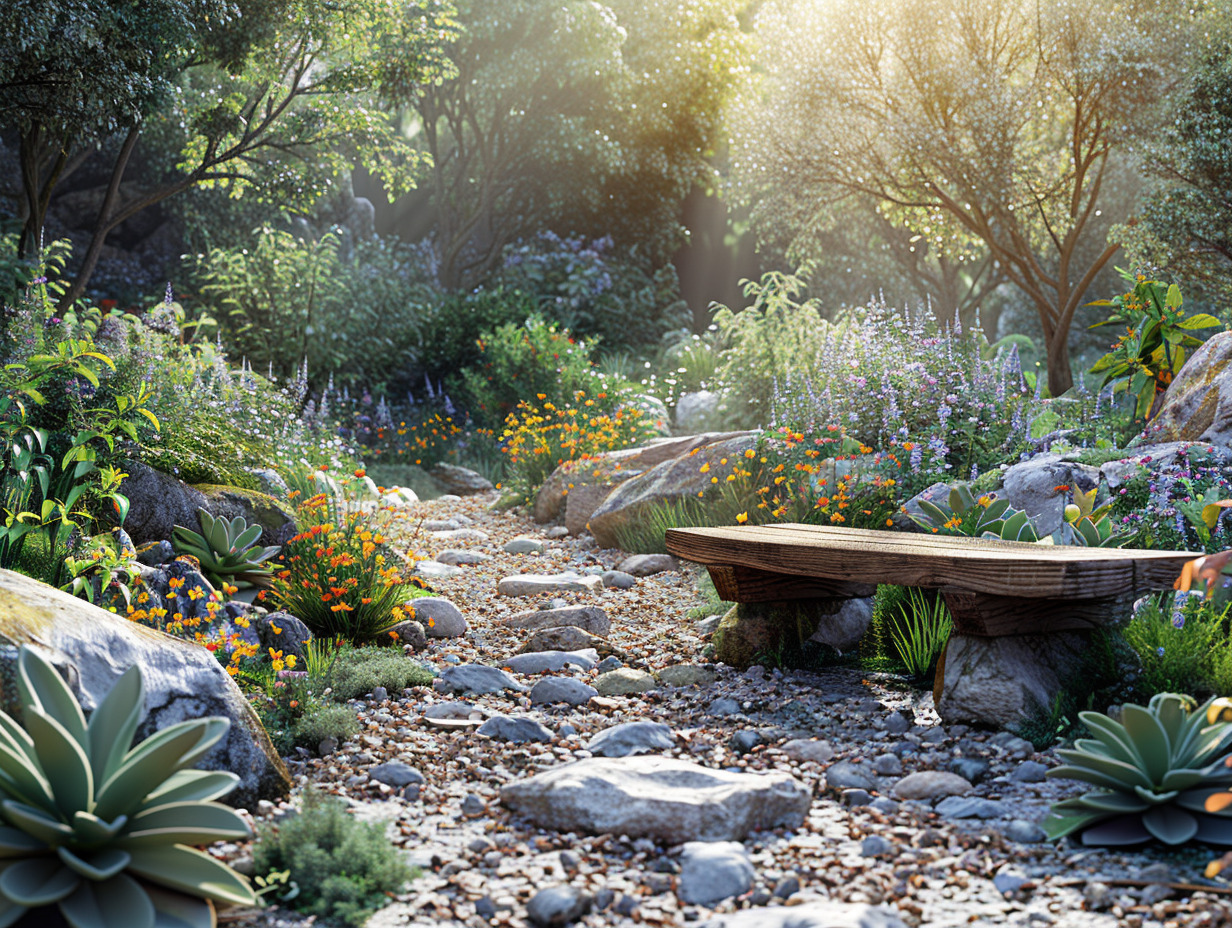
Choosing plants and stones: practical tips and arrangement ideas
Harmonizing mineral and plant elements: Find a subtle balance between stones and plants, the key to a sustainable and aesthetic rock garden. The stones, preferably local, should be placed partially buried to establish their presence and suggest continuity with the surrounding landscape. Your mineral palette will be enriched by the varied hues and textures of pebbles, exceptional rocks, and slate, creating an ideal backdrop for the plant specimens.
Plant association: Integrate perennial plants, chosen for their adaptation to the region and their ability to thrive with little care. Miniature conifers and dwarf shrubs provide structure and verticality, while ground-cover perennials, grasses, and trailing plants weave a dense and colorful plant tapestry. Small floral touches, brought by small bulbs and perennial flowers, illuminate the composition with their seasonal brilliance, while succulents display their resilience to dry climates.
Designing the layout: Think of your rock garden as a work of art where each element finds its place to contribute to an overall harmony. The plants and stones should interact, creating focal points and gentle transitions. Vary heights and volumes to create movement and exploit contrasts between the upright forms of conifers or small shrubs and the sprawling nature of succulents and cacti. Leave space between plants for their future growth, anticipating the maturation of your alpine garden without maintenance.