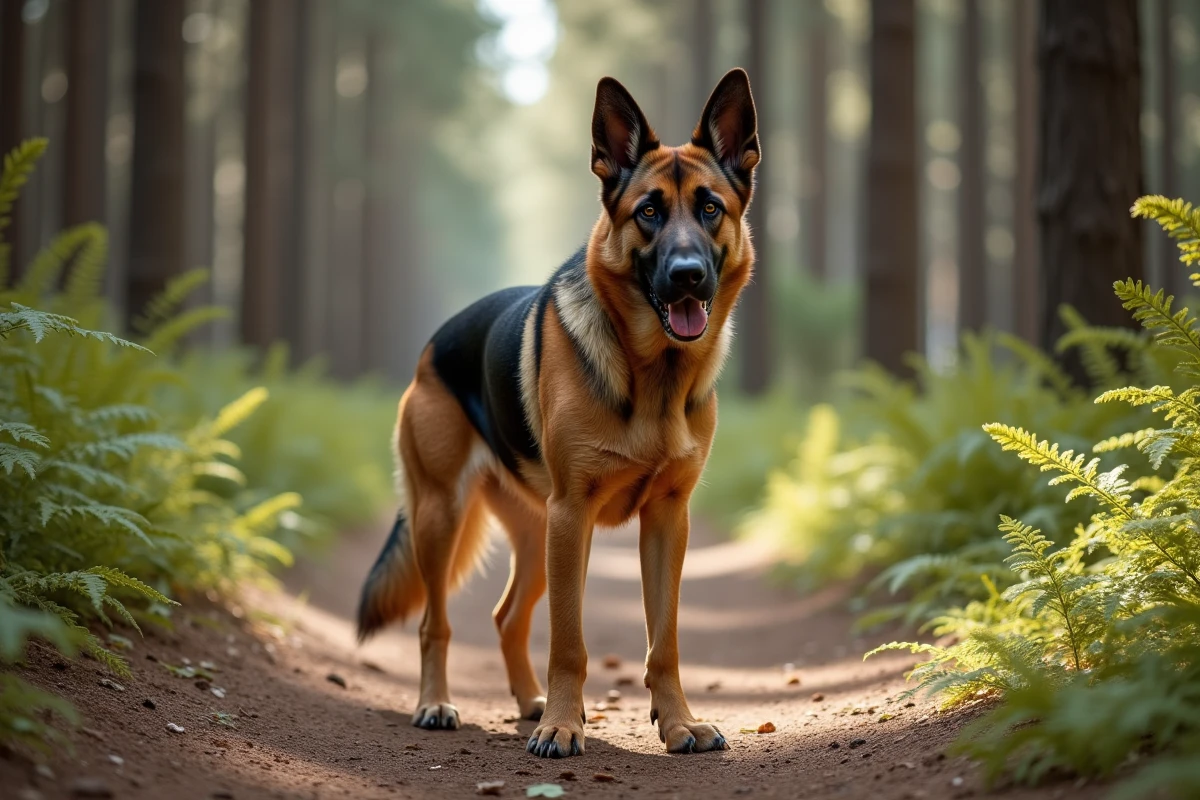
A Malinois mixed with a German Shepherd that destroys the couch in three hours of absence is not a character flaw: it’s a dog designed to work that has nothing to do. Before falling for this spectacular crossbreed, one must consider what it requires on a daily basis, not just what it promises on paper.
Shépinois in a single-parent family: why human presence changes everything
We often talk about the versatility of the Malinois-German Shepherd mix. But in practice, the first factor for success or failure with this dog is the amount of time spent at home.
A single parent with young children faces two constraints: fragmented schedules and attention already captured by the little ones. The Shépinois, on the other hand, needs structured interactions for several hours a day. Without this, it develops compensatory behaviors (barking, destruction, hyper-attachment to a family member).
The problem is not cohabitation with children. This crossbreed can be protective and gentle with little ones. The real issue is that no one in the household has the availability to channel its energy. Two short walks are not enough. It requires tracking, search games, and stimulating obedience work.
For a motivated single-parent family, the solution lies in a reliable external support: a trained dog-sitter, a dog club on weekends, or a neighbor who takes the dog out during the day. Without this safety net, many owners in this situation end up giving up before the dog turns two.
Additional information can be found on the Malinois-German Shepherd mix and its specific daily presence needs.
Physical and mental exercise for the Malinois-German Shepherd mix: what really works
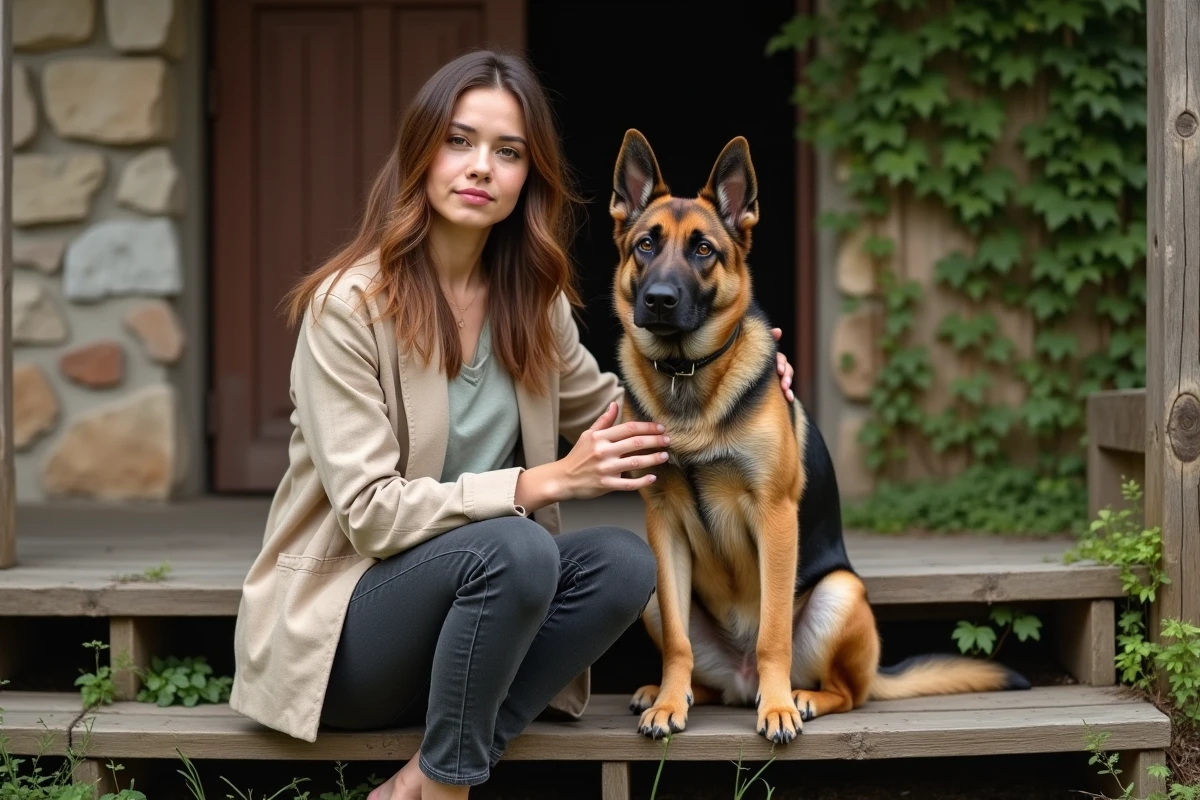
Running is not enough. A Shépinois that runs for thirty minutes comes back excited, not calmed down. The key is mental stimulation combined with physical effort.
The activities that work best with this crossbreed are those that engage the dog’s scent and decision-making skills:
- Tracking in the underbrush, where the dog follows a scent trail for several hundred meters, remains the most tiring exercise for this type of profile
- Search and rescue mobilizes both endurance and concentration, and strengthens the bond with the owner
- Structured obedience courses provide a framework that channels the dog’s intelligence
A forty-minute tracking session tires a Shépinois more than an hour of free running. This is regularly observed: the dog comes back, drinks, and sleeps. This is a sign of appropriate expenditure.
Repetitive throwing games (ball, frisbee in loops) often increase excitability instead of reducing it. This self-sustaining predatory reflex quickly becomes compulsive in such a reactive crossbreed.
Training the Shépinois: costly mistakes in the first six months
The Malinois-German Shepherd mix learns quickly. Too quickly, sometimes. It picks up patterns in just a few repetitions, including the wrong ones. An owner who gives in once on the couch creates a precedent that the dog will systematically exploit.
The first six months set almost all behavioral benchmarks. During this window, three mistakes frequently occur.
The first: socializing too late. This crossbreed has an early protective instinct. A puppy that does not regularly meet strangers, other dogs, and varied environments before four months risks becoming reactive in adolescence.
The second: confusing obedience with submission. The Shépinois willingly cooperates when it understands the logic of what is being asked. Physically forcing a dog of this size and intelligence breeds distrust, not respect.
The third: neglecting frustration. Learning to wait (in front of the food bowl, before going out, while talking to someone) is an exercise in itself. A Shépinois that cannot manage frustration becomes unmanageable as an adult, especially in public spaces.
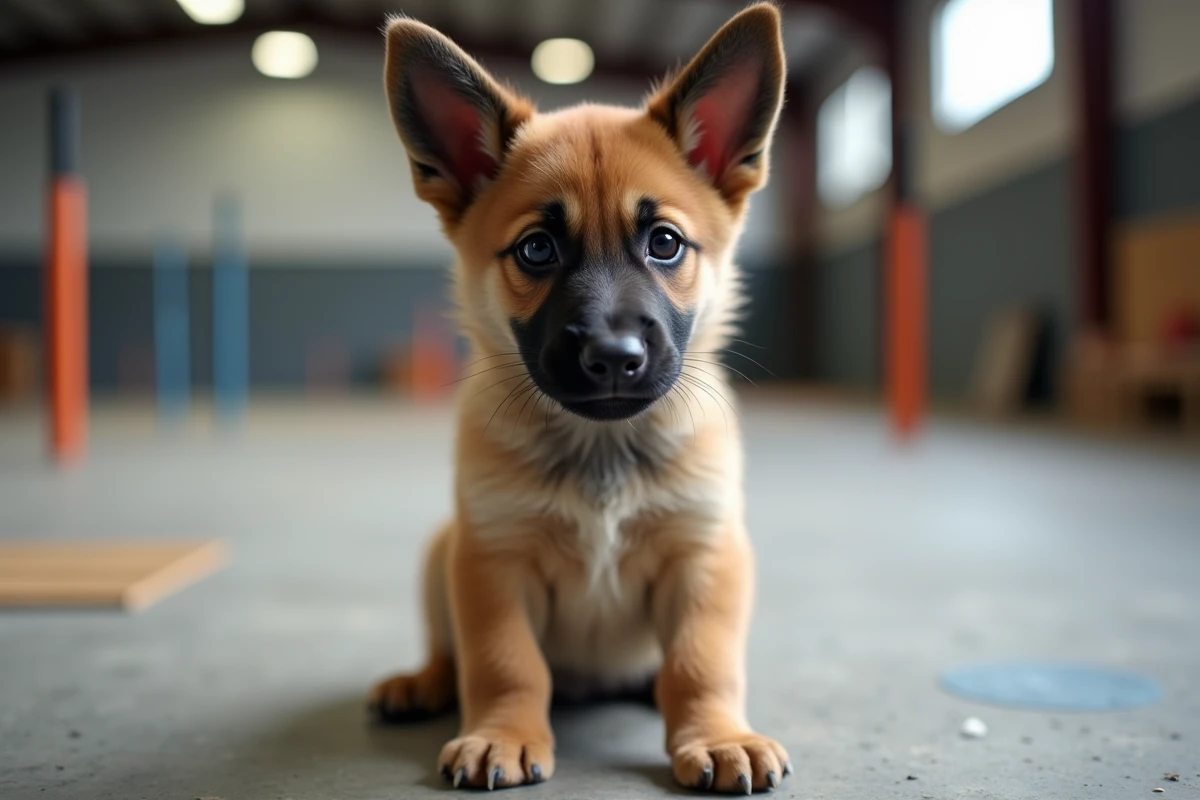
Health of the Malinois-German Shepherd mix: monitor joints and stress
This crossbreed inherits the robustness of the Malinois and certain fragilities of the German Shepherd. The two main points of concern are joints and managing chronic stress.
Hip dysplasia remains a risk shared by both parent breeds. The mix does not eliminate it; it only limits the probability when the breeders are X-rayed. A puppy from untested parents is a gamble for the long term.
Chronic stress, on the other hand, is often underestimated. An under-stimulated Shépinois or one left alone for too long develops measurable physiological signs: compulsive licking of the paws, recurring digestive issues, localized hair loss. These signals are not whims. They reflect a state of distress that must be addressed through daily adjustments before considering a veterinarian.
The longevity of this crossbreed greatly depends on lifestyle. An active, stimulated Shépinois regularly monitored by a veterinarian familiar with herding breeds ages overall better than a sedentary individual fed low-quality kibble.
The Malinois-German Shepherd mix is not a difficult dog. It is a demanding dog, which is quite different. The difference lies in the owner’s ability to structure their daily life around an animal that cannot tolerate boredom or prolonged solitude. Those who prepare for this will have a companion of rare reliability.